If you use oxygen therapy and want to stay active, a portable oxygen concentrator (POC) lets you leave the heavy tanks at home. It delivers oxygen through a small nasal tube, so there are no tanks to refill, and many models are light enough to carry on your shoulder.
Choosing the best portable oxygen concentrator can be confusing, because the right one depends on your prescription. This guide covers five popular, FDA-cleared models and what makes each one different, using manufacturer specifications.
Important: portable oxygen concentrators are prescription medical devices. In the US, you need a prescription, and your doctor decides the type of flow and the setting that is safe for you. Machines sold without a prescription are not FDA-cleared and may not deliver the right amount of oxygen, so we have not included any.
Disclosure: This post may contain affiliate links. When you purchase a service or a product through the links, I sometimes earn a commission, at no additional cost to you. Read my full disclosure here.
What is a Portable Oxygen Concentrator and What is it used for?
A portable oxygen concentrator is a medical device that gives you supplemental oxygen without a tank. It draws in room air, removes the nitrogen, and delivers concentrated oxygen through a nasal tube. Because it makes oxygen from the air around you, it doesn’t run out and never needs refilling. What it does need is power, either from a charged battery or from an outlet.
Some POCs deliver a steady stream of oxygen (continuous flow), others deliver oxygen in a short burst each time you breathe in (pulse flow), and many can do both. Doctors prescribe them for people with lung conditions such as COPD, emphysema and pulmonary fibrosis, whose oxygen levels are low. A pulse oximeter can help you keep an eye on your oxygen saturation at home, but your doctor decides your oxygen settings, and you should never raise or lower them on your own.
Best Picks for the Top Rated Portable Oxygen Concentrators In 2026
We chose models from established makers that are FDA-cleared and sold with a prescription. There is no single best POC for a condition like COPD or pulmonary fibrosis. The best one is the device that can deliver the oxygen you have been prescribed in the situations where you need it. Because these are prescription devices, they are sold through authorized suppliers and manufacturers rather than Amazon.
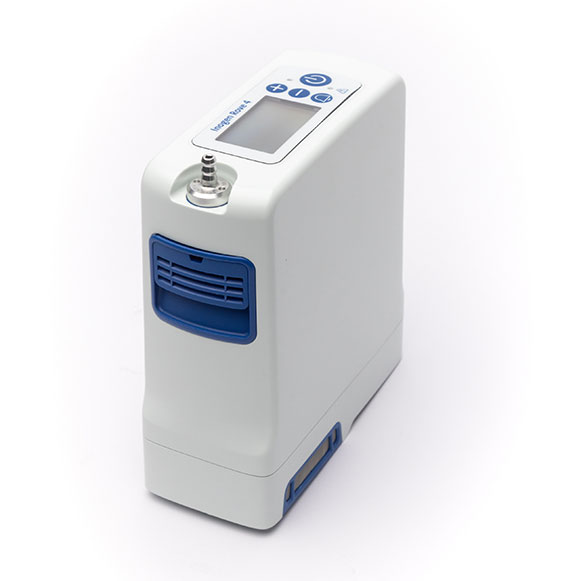
1. Best Portable Oxygen Concentrator For Air Travel – Inogen Rove 4
Quick view
Available in: US
Description:
The Inogen Rove 4 is a pulse-dose portable oxygen concentrator and one of the lightest on the market, at 2.9 pounds with its standard battery and 3.4 pounds with the extended battery. Its small size and low weight make it a popular choice for travel.
The standard battery runs for about 3 hours, and the extended battery runs for nearly 6 hours at the lowest setting. Battery life is shorter at higher settings. If you plan to fly, confirm that the device meets the Federal Aviation Administration (FAA) acceptance criteria and check your airline’s requirements before you travel. Bring enough spare batteries for delays and connections.
2. Best Portable Oxygen Concentrator For Everyday Use – Inogen Rove 6
Quick view
Available in: US
Description:
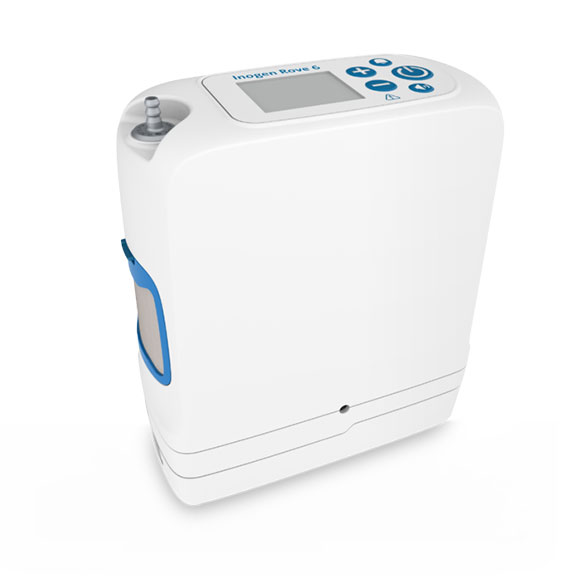
The Inogen Rove 6 is a pulse-dose model with 6 flow settings. It weighs 4.8 pounds with the standard battery. Inogen lists up to 6 hours 15 minutes of battery life with the standard battery, and up to 12 hours 45 minutes with the extended battery at setting 1. It works with the Inogen Connect app.
3. Best Portable Oxygen Concentrator With Continuous Flow – Oxlife Liberty2
Quick view
Available in: US
Description:
The Oxlife Liberty2 delivers continuous flow of up to 2 L/min and has 10 pulse-dose settings. It weighs 6.35 pounds without the battery and about 7.5 pounds with it. It can run on AC, DC, and battery.
4. Best Portable Oxygen Concentrator For Long Outings – CAIRE FreeStyle Comfort
Quick view
Available in: US
Description:
The CAIRE FreeStyle Comfort is a pulse-dose unit with 5 settings. It weighs about 5–6 pounds and offers up to 16 hours of battery life with the double battery. It has autoSAT technology that adjusts oxygen delivery to your breathing rate.
5. Best Portable Oxygen Concentrator For Higher Oxygen Needs – CAIRE SeQual Eclipse 5
Description:
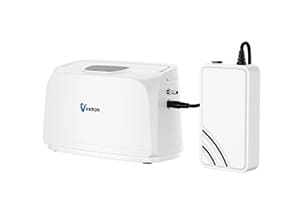
The CAIRE SeQual Eclipse 5 offers the highest continuous flow on this list (up to 2.5 L/min) plus pulse dose. It is heavier (15–18 pounds) and comes with wheels and a handle.
Final Verdict
The best portable oxygen concentrator for you depends on your prescription. Talk with your doctor and your oxygen supplier before you choose. Ask the supplier to confirm that the specific model can meet your prescribed setting, and to tell you how long the battery lasts at that setting. If you plan to fly, check FAA acceptance and your airline’s rules, and always carry spare batteries.
POCs usually cost upwards of $2,000, but insurance, Medicare, rentals, payment plans, and financial assistance programs can help. Never use oxygen near an open flame or while smoking.
FAQs
Q1. Do I need a prescription to buy a portable oxygen concentrator?
Answer: Yes. Genuine portable oxygen concentrators are only available with a prescription.
Q2. Can portable oxygen concentrators be used 24/7?
Answer: Only as your doctor prescribes. Most need to be plugged in or have spare batteries for longer use.
Q3. What is the difference between a portable oxygen tank and a portable oxygen concentrator?
Answer: A tank stores compressed oxygen and runs out. A concentrator makes oxygen from the air and never runs out, but needs power.
Q4. How long does a portable oxygen concentrator battery last?
Answer: It depends on the battery, your setting, and flow type. Always ask for the real-world battery life at your prescribed setting.
Q5. Can you fly with a portable oxygen concentrator?
Answer: Many can, if they meet FAA criteria. Always check with your airline and carry spare batteries.
Q6. What are the disadvantages of portable oxygen concentrators?
Answer: They are expensive, need power, and battery life is limited (especially at higher settings). Pulse-dose models do not suit everyone.